The Last Breath
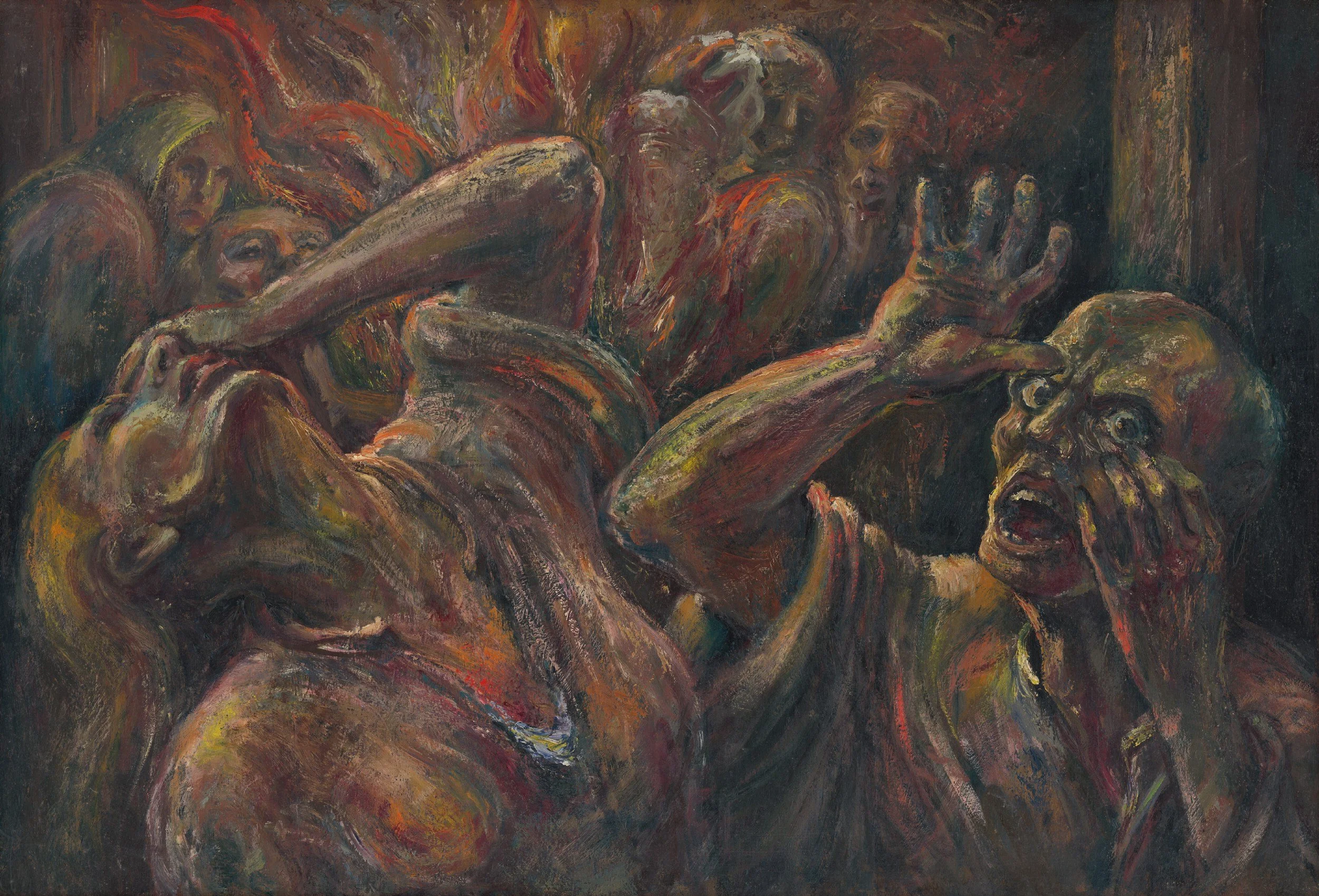
Art from the Europeana on Unsplash.
We moved like a river of broken dreams across the scorched earth, thousands of us fleeing the eastern borders of our homeland. Once proud citizens of Bermuda, now reduced to wanderers in our own country. The afternoon sun beat mercilessly as our procession stretched endlessly toward the horizon. Dust rose from our shuffling feet and hung in the air like a veil the land itself had drawn over us, too ashamed to watch.
My daughter Amara slept against my back, her tiny breaths warm against my neck, while my son Kiano trudged ahead, his twelve-year-old frame bent under the weight of our few remaining possessions. The boy who once chased butterflies in our garden now carried the burden of our displacement on his narrow shoulders. Every few minutes he shifted the bundle from one arm to the other, and I could see the raw red marks the straps had pressed into his skin.
Two days had passed since we left our village. Around us, children who should have been playing in schoolyards instead balanced bundles larger than themselves on their heads. Their eyes registered memories no child should carry. The thunder of artillery and the whisper of approaching militia had become our daily rhythm, the way birdsong or church bells had once been. We knew the sound of shelling the way we once knew the sound of rain on a tin roof, and our bodies responded before our minds did, crouching, running, pressing flat against the earth.
“Mama,” Kiano’s voice cracked, drawing me from my thoughts. “I need to rest.”
“Just a little further, my son,” I said, reaching out to steady him. Three months had passed since they gunned down his father, mistaking him for a rebel. My beloved Rabiu died in my arms while Kiano watched from the doorway, his school uniform still buttoned to the collar, and now I saw that moment reflected in our son’s eyes every time he looked at me. He never spoke about it.
He only carried things, as if by carrying enough weight he could press the memory down into his bones where it might stop hurting.
A commotion ahead brought our column to a halt. An elderly woman, Nyota, had collapsed in the dust. Her daughter Zuri knelt beside her, panic etched across her face. A circle of onlookers formed but no one moved to help. We had all learned by now that stopping too long could cost you your life.
“Mama, please,” Zuri begged. “You must get up. The soldiers are coming.”
Nyota’s weathered face creased with a gentle smile. “My child, my journey ends here. But yours must continue.”
“No!” Zuri clutched her mother’s hand. “We stay together or not at all.”
The old woman’s eyes shone with unshed tears. “Listen to me, Zuri. When I reach heaven, I will speak to God himself. I will not rest until He brings peace to our land, until He returns the light to your blameless eyes.”
Before Zuri could protest further, Nyota’s body began to convulse. Her back arched, her fingers dug into the dirt, and then she was still. Another casualty of a war that fed on the innocent. Zuri’s scream was short and sharp, more animal than human, and then she pressed her forehead to her mother’s chest and went silent.
I wanted to comfort her, but the distant rumble of military vehicles spurred us forward. We had no time for proper mourning. Survival demanded we keep moving. I adjusted Amara on my back, took Kiano’s hand, and pressed on, my feet bleeding into the rust-colored earth beneath us.
Behind me, I heard Zuri rise and follow. She did not look back. None of us did anymore.
The sun was beginning to set when Kiano stumbled again. This time, his knees hit the ground hard, and the bundle he carried spilled across the dirt path. A cooking pot rolled into the brush. A photograph of Rabiu landed face down in the dust. His thin shoulders shook with silent sobs.
“Why did they kill Baba?” he wailed, his voice raw with grief and exhaustion. “Why are they making us run?”
I knelt beside him, my heart breaking anew. “Some men carry hatred where they should carry love,” I said, gathering him close. His ribs pressed against my arms. He had lost so much weight that holding him felt like holding a bundle of sticks wrapped in warm cloth. “But we must keep moving, my brave one. For Amara. For the future.”
The sound of helicopter blades slicing through the air made us both freeze. The column scattered, mothers dragging children into the brush, men pressing flat against the ground. But instead of the dreaded government gunships, a different sight emerged over the horizon: the white and blue flags of the UN refugee camp.
Relief swept through the crowd like a cool breeze. We quickened our pace, hope lending strength to our weary legs. At the camp’s entrance, aid workers in blue vests rushed to help those who could barely stand. I fumbled with my wrapper to give Amara water, my hands trembling with exhaustion. The camp smelled of cooking oil and antiseptic and sweat, and somewhere radio played a song I almost recognized, something from before.
When I finally freed her from my back, my daughter’s body was limp and cold.
“Amara?” My voice emerged as a whisper, then rose to a scream that tore through the camp. “Amara! Wake up, my baby!”
Aid workers rushed forward, gently trying to take her from my arms, but I clutched her closer. Her head lolled against my shoulder. Her lips were dry and slightly parted, as if she had been about to speak. Kiano stood frozen beside me, his young face becoming a mask of horror. At that moment, I saw him transform from a child into something else entirely: a survivor who
had witnessed too much death.
“Please,” a woman in a blue vest knelt beside me, her eyes kind but urgent. “Let us help.”
But we all knew it was too late. The heat, the journey, the weight of our suffering, it had been too much for my baby’s fragile body. While I had focused on keeping us moving forward, death had crept silently up my back and stolen my daughter’s last breath. I tried to remember the last time she had stirred, the last time her fingers had gripped my wrapper, and I could not. That was the cruelest thing. That she had left without a sound, and I had not even felt her go.
Kiano’s hand found mine in the dust. “Mama,” he said, his voice steady despite the tears streaming down his face. “Amara has gone to be with Baba. They will watch over us together.”
His words, so much older than his years, broke something in me. I collapsed into the red earth, my grief erupting in wails that echoed across the camp. Other mothers gathered around us, their hands on my shoulders, my hair, my back, adding their voices to my sorrow. Not just for Amara, but for all our children lost to this senseless violence. For every small body that had grown still on a mother’s back, in a mother’s arms, beside a road that led nowhere safe.
As the sun set over the camp, casting long shadows across the endless rows of tents, I held my remaining child close. Kiano’s heartbeat against my chest reminded me that even in our darkest hour, love persisted. We had lost so much: our home, our dignity, my husband, my baby.
But somehow, we had to find the strength to continue.
“We will live,” I whispered into Kiano’s hair, making a solemn promise to both the living and the dead. “We will live, and we will remember, and one day, my son, we will help build a world where no mother has to bury her child in foreign soil because powerful men chose war over mercy.”
Around us, the camp slowly settled into an uneasy night. Somewhere a child cried out in sleep. Somewhere a woman sang low, the melody carrying no words I knew but a grief I understood completely. Kiano’s breathing slowed against me, and I held him tighter, feeling the quick drumming of his heart, this boy who was all I had left, this boy who had already learned that the world could take everything from you and still expect you to walk.