Christmas in the Ghetto.
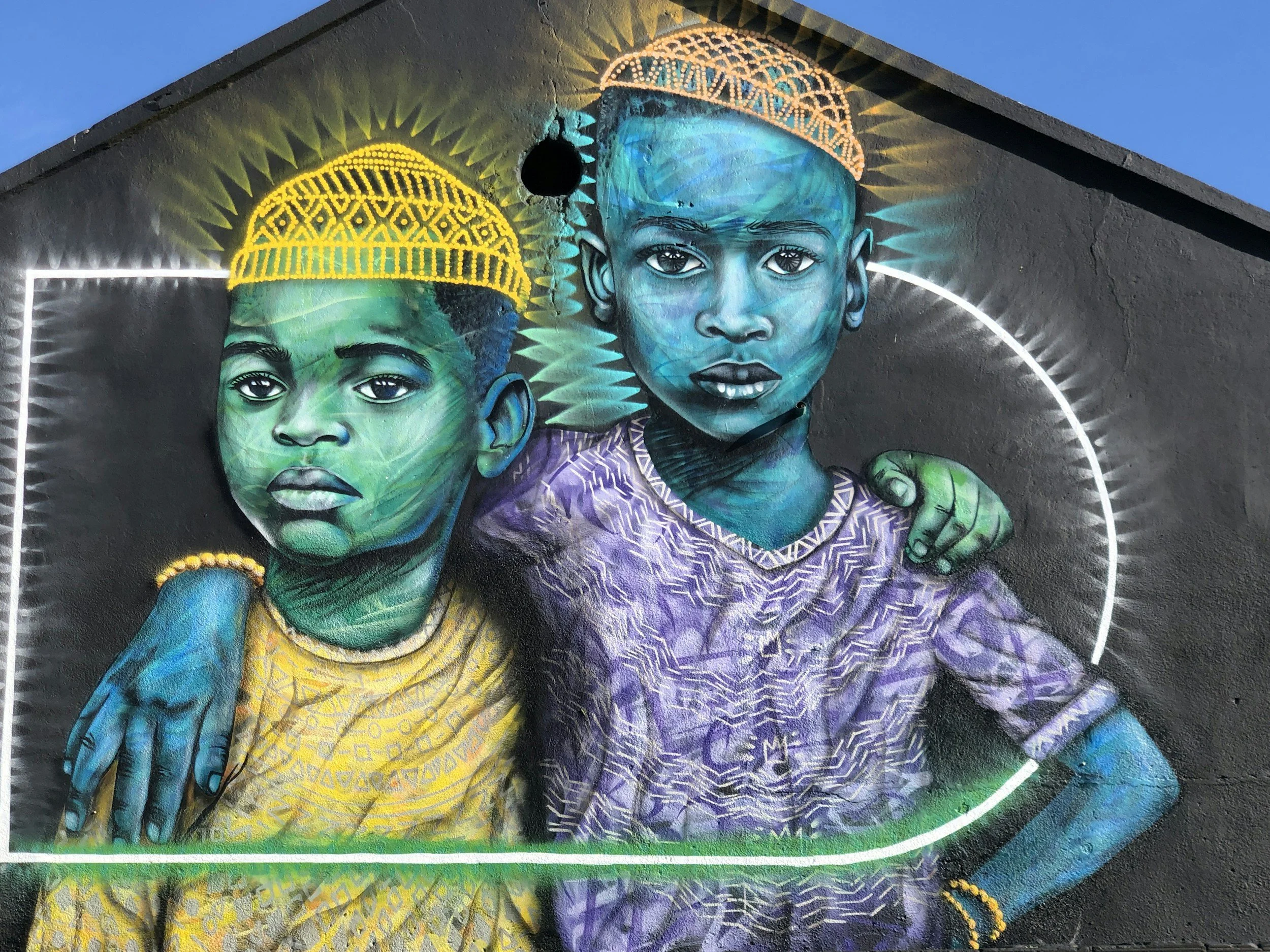
Art by Rutendo Petros on Unsplash.
As usual, the sizzling, frying, juicing, roasting, pounding, and boiling begin two days before the actual day—though in some homes, it starts two or three weeks, even months, beforehand. The chin-chin is deep-fried and hidden; a home-reared flock of chickens and a trip of goats—depending on the pocket and household size—are slaughtered at the wood-and-zinc makeshift shed-roofed abattoirs, opposite Diamond Paint Junction for no more than ₦100. Afterward, they’re marinated and crammed into nylon bags or foil-covered rubber bowls, then pushed into the refrigerator—a necessary stash. A bag of Mama Gold rice, cartons of malt, Capri-Sun or Ribena for the children, and green bottles are towered and piled into Papa’s terrazzo-floored bedroom—where they will be long salivated for, and glow-eyed, until the christening of Christ.
At the foot of a shingled storey building, a mid-life, labour-stretched woman with cabbage-sized breasts, dressed in a carton-shaded T-shirt bearing I’M TOO PRETTY TO WORK, is hunched over a glutinous pot of stew, stirring mildly in a sustained swirl. The lights are soothingly dim and coy. The spicy taste of crookery is exultant everywhere. Her four or three daughters, today’s underlings, are littered about her: dicing onions off their magenta overcoats, handpicking and deveining Ugwu and scent leaves, or just sitting glumly, staring morosely. Her hair is done in a cascade of flowing ringlets, parted and gelled just off-centre, a bit undone at the tips. She lifts her robust arm and, in a single, swift motion, plops three cubes of Royco or Maggi into the purring mix. All four faces are slightly flushed from the heat, embalmed with specks of sweat. A muggy afternoon indeed—surprisingly so for a damp, drab harmattan sky.
The youngest underling, perhaps five years old given her childish pudginess, chin cupped in hand, drapes herself in an oversized APC T-shirt—stain-ridden and dirtied—flagging Buhari’s printed face and CHANGE-THE-CHANGE glossing in red. She dons a threaded knot of colourful beads on her head, and like her too-harried mother and ponytailed big sisters on the darker side of a fair complexion, their braids are deftly knotted like cobwebs, plaited a day or so before now: Christmas hair, of Brazilian wool and Lush attachments.
The smell of muffled music—Mercy Chinwo and Judikay—a yard away from a neighbour’s TV, coos through the soft tableau. If she seems benign, as it frequently appears, that’s hardly perplexing. All this, as far as she knows—her mother’s humming and spicing, the pungent sight of the firewood kitchen—is far more benign than doting before a breathing TV, where her three brothers have been fastened like nails to a spot all through the sultry morning.
Delicious spells of merriment purge the air more vehemently than the tomato and chicken stew, still broiling on a tripod hearthstone ringed with jagged firewood and plastic bottles; more so than the ONGA-seasoned fried rice and party jollof from the next door’s busied kitchen. The bangers and fireworks pollute the darkened skyline at dusk in a brief throb of deafening booms, spearheaded by her mischievous brothers and cohorts. The Christmas songs—on tinny repeat from a street stereo kiosk flanking their homefront since the 20th—blare beside a rattling I-beta-pass-my-neighbour generator.
Again, the rainbowed, low-budget Christmas lights and plastic Santa Claus profiles festooned on windowsills and doorpost lintels; the back-to-back Hollywood canonized shows and septillion American films on replay: Home Alone, Jack Frost, How The Grinch Stole Christmas, The Simpsons aired on cable networks—but mostly on NTA, AIT, PRTV, and Silverbird.
The ghetto dwellers had, all too well, all too deftly and aforetime, painted these auspicious days without inhibition, with precise details, perhaps in order not to be tools of scorn for gossip-mongers droning through the neighbourhood night and day. Or yet again, because festivities like this have grown into the high echelon of familial nativity among nuclear units, the Christmas clothes, shoes, even stockings, new underwear, and plastic eyeglasses were sought for, stocked, and briefcased for their appointed hour—sometimes oddly in January or February, March, and July. Sadly, anything after September—the ninth month—is more than often ill-fated, as Christmas prices hike at breakneck speed, threatening to strangle late market-goers.
Somewhere between the five-and-a-half-hour cooking, after a static-filled pause, in mid-sentence, and waving to her mother and sisters, who in turn regard her oddly but not bleakly, five-year-old Kamsi, spying out nothing in particular outside her mother’s wedged, kitchen door, arcs softly toward the crenellated passageway of the steaming compound. The slow-burning sun, slowly dwindling behind her lanky form, leaks through the fogged windows of neighbouring houses.
She skips and mopes onto the home front where she had hitherto tossed her dolls and teddy bears—on this tiny square of Nigerian earth to which her family lays claim.
Kashim Ibrahim Street, like most of its chock-a-block counterparts—Zik Avenue, Tafawa Balewa, Niger Avenue, and West of Mines—the ghettoest of them all—piled at its snaky head, burst with an aureole of benign homefronts. The unsure sunlight, hymned by the hour, blared into the streetscape, desperately warmer than bright. Thin blades of grass prised through the black, soil-rich earth padded at the verandahs of the houses, lined with grimy sheets of gutter runnings around the pathside runnel of the streets—acrid and foul-smelling.
The December-chilled breeze blew spells over the rooftops—magical red dust of harmattan nestling on the dry skin of the streets. The serpentine curve of roads, slightly partitioned like a centipede, cocoons a plethora of mostly clamped compounds, all brimming with tenantry. Perhaps, we might rightly say, its population was mostly Igbo-speaking occupants, a handful of Plateau indigenes, and two or maybe three Yoruba tribal-marked faces. For the other tribes, there’s no telling; maybe one or so here and there, diminished and inseparable from the rest.
The engine rush of clustering yellow- and green-painted keke-napep stirs up a metallic fracas, thundering their wanton presence upon the backs of storey buildings branded with spiky inscriptions in black and red chalk on their dust-eaten fences or rusted gates: DO NOT URINATE HERE—BY ORDER.
THIS HOUSE IS NOT FOR SALE, BEWARE OF 419.
BEWARE OF DOGS. And the unfinished stories from distant passersby, lost in the wings of their own enclosure like delusional junkies in a madhouse. This was the curse of the ghetto, a contagious virus wrought by the claws of Instagram, Facebook, TikTok, Twitter, and all. Absentminded teens—Gen Zs—like zombies comb through the dust-blown streets just before Gaskiya Highland School at the other end, gawking sheepishly at their phones in unshakable devotion, only raising their brows every now and then, intermittently, to mark off their next route or bend.
Goodman Printing Press, Oga Lucky’s Bet9ja Shop, Hollywood Tailors, and Landlady’s Provision Store, all tabernacled on this same Kashim Ibrahim, are—shockingly—the most emphatic of anything at all. If there were ever a census, they might be the only ventures qualifying as business within its mass of houses. Otherwise, the neighbourhood is strictly residential and vociferous.
By mid-afternoon, the sky piercing blue, this Ghettoland becomes a bright toothprint—vast suburban houses scattered unruly, like teeth in the aged and rustic mouth of the city. Its earthworm streets—pressed down, shaken together, and running over with the chore of living—are flanked by the sun’s heated tongue.
Another 25th December.
All of yesternight’s dew has bed-wetted, thanks to harmattan’s haze, on their mattress of grass scattered about several homefronts. The leafy bougainvilleas rim the yards like rows of bent monks in prayer.
The day is stone-cold cool, like every few days before—so much so that it seems fatal to last the better part of ten minutes outside the house without cardigans or coats, or a woolen head warmer. And because Jos’ weather has the notorious habit of mood swings—one moment the room smeared with hellish heat, another glazed with unthawable frost—the ghetto has grown to be watchmen of the seasons.
A straggle of black pigeons wings the heavens overhead, the sleepy sun already yawning awake. Bright brown leaves blanket the ground through the quickening dawn, with the soft sun riding the sky amid a resplendent knot of pizzazz churchgoers—mostly mothers and their numberless children—all donned in their Christmas best.
New, slightly oversized shoes leave tiny scabs on their feet from itchiness—though they well won’t mind. The scratchy tag of softly perfumed polos and ironed T-shirts flags Mickey Mouse and Tom and Jerry faces. For the older boys: MY MONEY GROWS LIKE GRASS. Ridiculous jeans, knitted cardigans, leathery jackets, plastic eyeglasses. Nigerian seconds scissoring and ticking on toy wristwatches. Little trinkets of fake gold dot the necks of scanty-toothed girls, clad like Princess Sofia the First in too-ruffled gowns. Tawny-skinned, having adroitly been sponged clean and evenly powdered by their mothers a great while before dawn. And perhaps, already late for Mass, their singlets and underpants lie tangled on the floor back home.
The buttery scent of their smiles.
The fine chocolate irises of their eyes:
PROUDLY MADE IN NIGERIA.
The sash of their mothers’ wrappers, roped about generous hips, sweeps prettily beneath eyeshadowed, mascaraed, and nose-ringed faces, crowned with piled-high geles. Their Igbo and pidgin voices peppered with laughter and gossip, their bulbous buttocks bouncing to the rhythm of the road.
Because, immediately after God created Nigerians, He ran to His backyard to laugh. For to be happy and know it, is to be happy and know these things.
An exodus of clownish shadows saunters down the street on a cold Tuesday morning: mothers and children, Christmas morning, swaggering like a conspiracy of ravens unto the stone-walled, steepled pathway of Rwang Pam Street that leads to St. Theresa’s Catholic Church, making room, their eyes wide enough, for the sun of their lives.
Suddenly, wealthy-looking folks with the gold smiles—as of Nigerians— be the first purple miracle of Christ’s birth in the ghetto.
Papa at 6:26 a.m.—or thereabout, just before the pallor of dusk drains from the sky—slouches on a dust-streaked sofa amid a scanty throng of happy early risers. A thin plume of smoke from his cigar skates toward the ceiling. On the stool before him are four freshly collapsed bottles—Star, Life, Gulder and Hero—frothy at their lids. Green bottles.
And just ahead of this happy setup, three feet wide apart, between six other cowered heads, is a game board of Whot and Ludo, sliding and rattling every now and then, unbridledly. Money, sweat, and body odour make their swift errands across thirsty fingers and steaming bodies like beads on an abacus, beer moistening the edges of their lips and moustaches.
Surprisingly, far more than surprisingly, in this jaw-cracking cold, he wears only a singlet, a small potbelly visible beneath it, his threadbare trousers rolled halfway up his calves. Manspreading. Angling his head against the wall, he peels open a coin of chalk from a tablet of four and allows it melt on the pelt of his tongue—perhaps Paracetamol or Panadol Xtra.
Turbid-eyed, his hands seem denuded of flesh and strength, like dry, leafless branches. Still, by merest luck or mastery, he has won more rumpled Nnamdi Azikiwe faces than any of his other contenders, who regard him with silly suspicion. Every now and then, by habit, he shrugs his broad shoulders in a way that could be taken as “No,” or “Yes,” or both, or neither. Or whatever.
The sound of dice dicing over wooden boards swells through the room.
HAPPINESS RESTAURANT AND JOINT, No. 29 KASHIM IBRAHIM STREET, ADJACENT SOLAT WOMEN HOSPITAL—a poor, cemented sign says, outside the room painted in bright colours. Behind the sign, a fortress-like red-brick fence stands, curled barbed wire atop it.
Filling the dank room with her musky lavender perfume is Madam Cash—huge-looking and plus-sized—waiting listlessly on her all-men customers since midnight and into the freezing morning.
Chief Oliver De Coque’s Identity, Opportunity, Nwanne Di Na Mba, and Chief Osita Osadebe’s Nwanem Ebezina, Yoba Chukwu, Osondi Owendi and the likes trumpet from the one banging speaker, righted on the verandah, bricked and stoned on all four sides.
And every now and then, the men—laughing to stupor, raising their green bottles to the ceiling, striding a few unrehearsed dance steps in a ringed procession—would in unison scream, their kolanut-bleached teeth wide open:
“Happy December! We will see the end of this year—this year will never see our end!”
Staggering.
“Anyị ga-adị ka echi, n’ihi na echi anaghị agwụ agwụ. Happy Christmas!”
Drunk with happiness and beer:
“Happy Christmas!”
In the stuffy and very scanty parlour, the creaky metal door with an old rectangular decal that read in bold letters: 2007—MY YEAR OF CATASTROPHIC BLESSINGS flung wide apart, is clustered tightly with dozens of dark heads hovering expectantly. They come in batches—long-seen cousins, distant family relatives, neighbours and family well-wishers. Every now and then, the soft swish of curtains across the skin of the walls would announce another guest’s arrival.
Just within the corridors of this atavistic building, out the doorway, a washing line dangles at the far exterior edge of the wall, slacked by the weight of just-hung clothes dripping soapy water onto the parched gullet of the broken floor, smelling of OMO detergent, smelling of decay. The built-in squalid latrines wide-jutting at the north-facing end where lizards clambered and skipped, and children peed. An old Volkswagen Beetle is holed up in the housefront beside the mango tree and shrubs of lemongrass. The compound is remotely crude, leaning on the binds of thin concrete pillars bristled to the touch with cracked stucco. Flies colonize everywhere, pottering about in uncomplaining buzzing. At the edge of the pillars, wispy nets of cobwebs cocoon beetles, houseflies, and grasshoppers among spiders in its Insecta placenta.
Inside the parlour, on the green half-painted walls, hang browning photographs on crooked nails and a print of the DIVINE MERCY PRAYER CHART. The only seven plastic chairs in the room are hardly enough to go around, so the mothers, with great pains, manage to sit and the children splay out on the terrazzo floor, wolfing deep-fried chicken, rice and stew and salad in a communal chow, paired three by three—with packets of Ribena in their hands—under the eyes of their vigilant mothers, who once in a while call out names to ensure fairness. The babies among them are spoon-fed with milky pap.
At Mama’s insistence, their salivating mothers, alongside Uncle Rogers—the only man in the room—would be helped to an ample portion of jollof rice sided with fried rice and fist-sized chicken in her best china breakable collectibles and plates, sparsely touched, not for commonplace use for household meals, only rinsed and polished every now and then for a once-in-a-pink-moon occasion like this.
Early in the evening, the sun already slinking, she would weave about our two-roomed house—dirt-covered, aimlessly, perhaps her mind skating—behaving like a house help in her matrimonial earth, harried and refusing help from anyone, scraping out leftovers from burnished pots outside our verandah, flies congregated round uncovered dishes, all the while slightly indulged in the delicious gist sharpened by her friends inside the parlour. Because she must, by self-made duty, ensure that every belly is spated with Christmas chows. Then finally—thank God—helping herself to the bottom part of Christmas rice.
Afterward, ₦50 notes would be squeezed into our palms like drug dealers by numberless uncles and aunts and strangers, which Mama would deftly seed between her bra—for safekeeping, she says—cracking with sinister laughter. Evening will come again, and the leaves would ballet themselves around the emplaced feet of the mango tree, tumbling, softly flitting to the unrehearsed fluting of the piping wind. The kerosene lantern would be lit, the sudden spray of car light from our unnameable guests diminishing, one by one, into the expanding ghetto. But like the act of living, we only get one chance at this day—at least once a year—to avenge the curse of second-class livelihood. And at dusk, we would explode the ghetto gold with the last boom of our bangers and fireworks, the half-chewed Christmas songs still spewing, unhindered, from our overfed mouths. The rounded moon—God’s missing bead of milk—would crawl under the flattened table of night and live through this Christmas night in a starlit ghetto sky.