Anukara: the Forsaken.
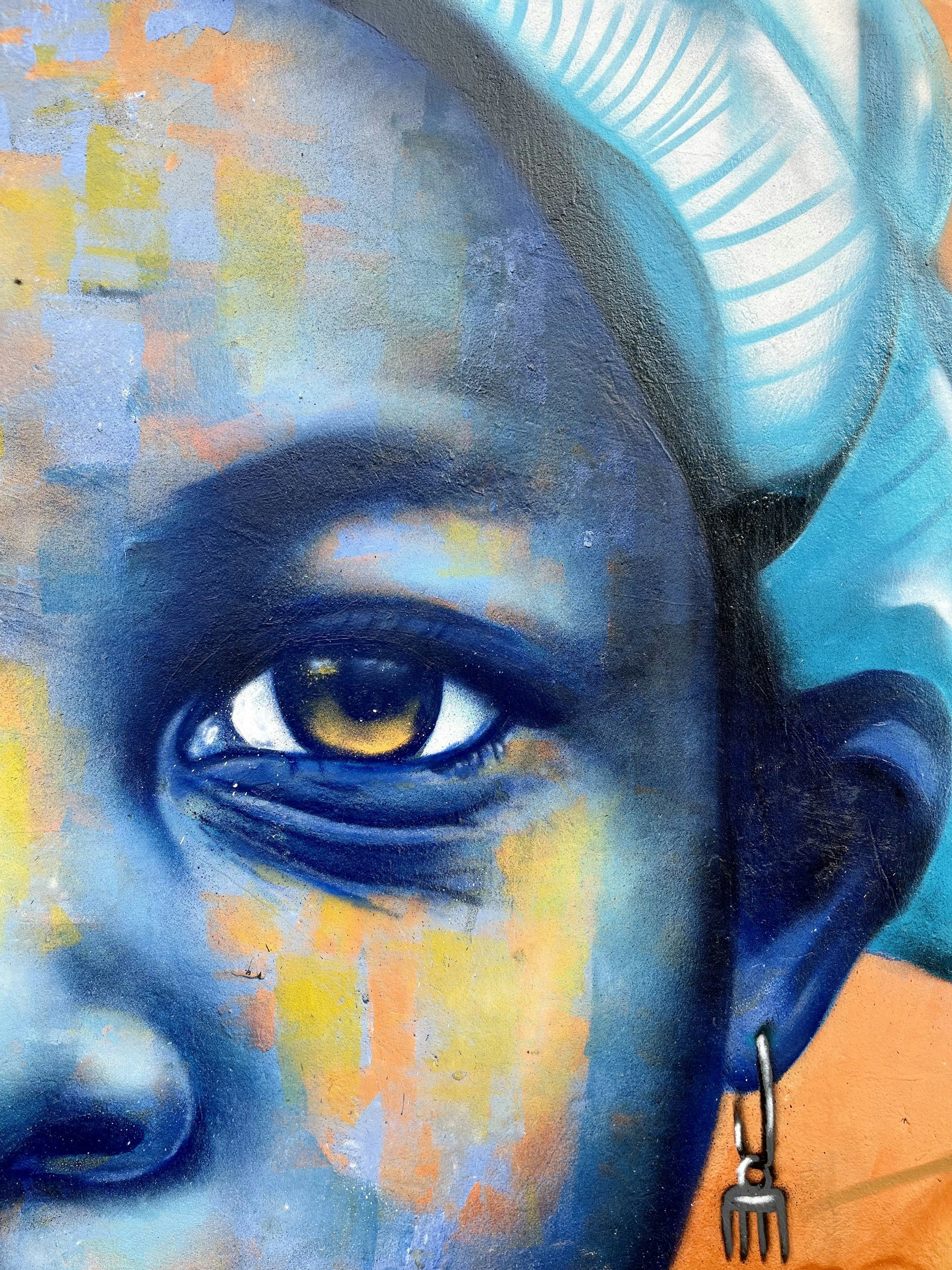
Art by E. Diop on Unsplash.
I was among the 27 Archaeology students from the University of Ibadan assigned to an excavation at Obong Itoro in Calabar State, Nigeria, as a prerequisite for our final-year project. Obong Itoro is a small hilltop village in the lush green belt of Cross River State, cupped between cocoa-covered slopes and embraced by the looping Ayaba River. Its houses—a mix of sunbaked mud walls and rusting zinc roofs—cluster loosely around a broad square shaded by the ancient Udom Akai tree, whose massive roots coil like sleeping pythons.
Our expedition team was led by Stanford University–educated Professor Uyi Iruegbu, a three-time recipient of the Fitzgerald International Award in Archaeology, and a member of the World Archaeological Congress. He was dutifully aided by a languorous PhD student in Archaeology, known by the ticklish nickname “Bones,” whose austere look gave him the ascetic appearance of a medieval Trappist monk.
Obong Itoro was an improbable location to find such astonishing discoveries lost to civilization for centuries. Three years previously, during a heavy thunderstorm, lightning had struck the surrounding hills encircling the whole village, and the force of it made them disintegrate. They collapsed into the earth below with tremendous force, causing widespread upheaval in the ground. After that, heavy rain fell incessantly for three days non-stop, washing away most of the village’s earth surface, and revealing a gaping chasm that cut deeply into the earth, about twenty meters deep.
When the villagers arrived to investigate the site of the devastation wrought by the fallen rocks and heavy deluge, they discovered, to their astonishment, the presence of irregular structures buried in the earth—the sizes of small huts—which were nothing their wildest imaginations could have ever conceived. Those strange discoveries, after being carefully examined by the first archaeological team on site, turned out to be monoliths: ancient basalt stones with mysterious faces and symbols. An extended dig below the area also unearthed new statues with inscriptions suggesting the remains of a hidden city, whose knowledge had been lost to time.
The fourteen-day expedition yielded significant discoveries. We worked tirelessly from the first ray of sunrise until the last glow of sunset. Among the treasures unearthed from the site were ancient metal tools— basalt chisels and hammerstones once used to carve the monoliths; polished stone axes and adzes for clearing land and shaping wood; and rare copper or bronze knives.
We uncovered decorated clay pots, adorned with geometric and spiral motifs echoing the carvings on the monoliths, as well as miniature clay figurines. Personal adornments included bead necklaces of carnelian, quartz, and glass; bronze or copper bangles and anklets; and carved bone or ivory hairpins.
Among the most perplexing finds was a sealed stone box bearing an inscription no one could translate, a fragment of an alloy unknown to modern metallurgy, and a perfectly preserved textile stitched with strange symbols. Radiocarbon dating placed these artifacts at close to two thousand years old! Yet, even with such extraordinary finds, a larger portion of the site remained untouched. The earth still held secrets it was not yet ready to surrender.
On the twelfth day, we went to bed tired but excited. We had located what seemed to be the ruins of an ancient smithery. Professor Iruegbu wanted the unravelling to come the next day, after we had all enjoyed a good night’s sleep and regained our strength. The signs of fatigue were already evident in our bodies. We went to bed that night with the promise of an exciting next day.
Our lodgings were in a large sleeping room, divided into two sections — one for the men and one for the women. We slept on raffia mats arranged side by side, much like the prayer mats in a mosque. I drifted quickly into a deep sleep. Somewhere in that dreamless universe, a voice came to me — deep, resonant, and commanding. It filled my head and pulled me abruptly back into waking consciousness.
When my eyes opened, the first thing I saw was a little child, perhaps no older than ten. She was wearing a flowing indigo robe embroidered with golden threads, something one would have expected to find in a civilization of over a hundred years ago. Her face was delicate yet haunting, her skin pale in a way that seemed untouched by time. Her eyes were large and unblinking, and I was struck by the deep sadness that oozed from them. The sadness was so profound I could literally smell it in the air.
Her hair was raven-black, the longest I had ever seen, cascading in a shimmering fall to her waist. She appeared to glow faintly, as if her very being were woven from light. The room seemed brighter in her presence. A sinking feeling ran through me with the coldness of ice.
A ghost!
I knew I was supposed to be scared to my bones, to be paralysed by shock and dread. I felt nothing of the sort. Despite the otherworldly appearance of the ghost, there was nothing to suggest that she was in any way malevolent. She was beckoning to me, her whole face silently entreating I come with her. She moved towards the door, her gaze never leaving mine, her hands gesturing softly, almost like a mother coaxing her hesitant child.
I glanced around the room. Everyone else was fast asleep. I was the only one awake. The clock on the wall read 1:27 a.m. I felt no fear as I rose from the mat and followed her outside, her form gliding ahead of me, still beckoning me to follow. A handful of sturdy boots lay by the entrance where we had left them; I slid my feet into one pair. The morning was cold and mist-laden. I faintly recalled a snippet of information I had read about the climate patterns of Obong Itoro — how the highland mists often made it chill and damp around the month of May.
“Take a digger and shovel.”
The voice came inside my head. I froze, scanning the darkness for the source, but there was no one. No movement. No sign of life at all. My eyes darted back to my strange companion, watching her intently.
“Digger and shovel.”
The words were from her — yet her lips never moved. It was a kind of silent communion, where she could send her thoughts into my mind with perfect clarity. Could she hear mine as well? I decided to test it.
“What do we need a digger and shovel for?” I thought deliberately.
“To dig a grave,” she replied.
A chill went through me.
“A grave?” I asked in my mind. “Whose grave?”
“Mine.”
A little shudder ran along my spine. I was not prepared for that.
“Please come.”
Her thought pierced mine, gentle yet insistent. Her face was the most heartbreaking I had ever seen. It held a childlike vulnerability that the adult instinct to protect in me could never ignore. It stirred something deep inside — something I could not name. I simply knew I was expected to help this strange, luminous creature who had chosen me.
“What is your name?”
I asked, slowly following her after picking a shovel and a digger from a pile of entrenching tools outside. I didn’t get a reply for a long moment, during which I trailed behind her towards what led to the untamed fringes of the forest beyond our dwelling place. The area was far from any human habitation, along crooked paths flanked by giant silk-cotton trees whose shadows knotted together overhead like a vaulted ceiling. It would have been eerie to walk here alone at such an hour. There was a mystical density in the air… something charged, alive, as though the night itself was watching me. I got the sensation of a resonating presence — a weight immeasurable and ancient beyond mortal comprehension.
“My name is Anukura.”
It came like a whisper; in a childlike, conspiratorial tone, the way one speaks of things that are not meant to be spoken aloud. The moment I heard her name, the atmosphere shifted. Somewhere I heard the faint, dissonant chiming of bells, far away and tolling on some invisible wind. The air grew colder with every step.
I kept a mental count of time; by my estimate, we had walked for over an hour before we reached what seemed like the ruins of an old settlement. There were signs of life long gone — tumbled stone foundations swallowed by moss, and the skeletal remains of wooden posts darkened by age. Anukura stopped and stepped lightly to a patch of ground slightly raised above the rest, beneath the twisted roots of an ancient tree whose trunk leaned as if bowing to her.
“Dig here.” The words rang in my mind.
I dug for what felt like three hours. The ground was hard, and I encountered many obstacles in the form of stones and rooted branches, which had to be pried away with the digger. Despite the chilling climate, I was perspiring and panting. All the while, the restless form of Anukura hovered around me in the impatience of a child who cannot wait for her gift to be unwrapped. I could not tell if the adventure brought her thrill or trepidation, or if she was suspended between both.
My shovel struck the face of something that sounded like hollow wood. With my hands, I began clearing the sand from its surface. It revealed a wooden coffin, no bigger in length than the size of Anukura herself.
“Bring it up,” the voice came in my head.
I heaved up the small casket, which looked light, considering whatever it was carrying had long withered away. A little rattling sound came from the inside. It sounded like the contents of a child’s toy box filled with broken trinkets. The wooden frame of the coffin had since softened and cracked due to age and dampness.
The coffin was sealed with heavy metal chains wrapped around it. Surely, there was no way I could force it open. Anukura waved her hand, and to my astonishment, the heavy chain broke away into fragments as though it had been made from straw.
The interior of the coffin was a hollow chamber, which contained, as I expected, the skeletal remains of a human. But the way they were arranged astonished me. That was not the way I expected one to be laid to rest. The head was placed separately at the far end. The bones of the hands and legs were bound together, arranged side by side like artifacts in a display. What was left of the torso, from the ribs to the pelvis, was stacked with deliberate precision. It was like a ritual of some sort — not a burial meant for peace, but one for imprisonment.
“My death was meant as a punishment — to prevent my soul from passing into the eternal world, so I can never be reincarnated,” she said, a tinge of sadness colouring her words. “I was destined to roam the earth in my spirit form, restless and unable to find peace. Those who were responsible for my death in my past life did it with the assurance that my spirit would forever be chained between worlds.”
A chill that had nothing to do with the cold air of the crypt slid down my spine.
“Those who killed you,” I whispered. “Who were they?”
“Men and women without names. People who thrived in the shadows of power, feeding on fear, feeding on blood.”
“Why did they kill you?”
My thoughts swirled. It was impossible for me to find any valid reason why such an innocent life could have been cut down.
“Where wickedness abounds,” she continued softly, “a person with light in their heart becomes a threat. It was my destiny, once upon a time, to put an end to the stronghold of evil in the world. I was sent to shatter its dominion — but I could not, because I met my end at the hands of those corrupted ones before I could begin to fulfill my purpose.”
“Why me?” I said. It was a question whose answer I feared yet longed to hear.
“Because you are pure,” came the answer. “Your soul is clean, and only a person without blemish could deliver me from the curse that binds me. Only someone with such innocence… such light. Like you. I have waited for you for two hundred years. I have lingered in the shadows until the time you were born. I led you here. I marked your steps. Only you could unseal me — only your blood could set me free.”
This revelation struck me like a thunderclap. That I could be fated to be instrumental to the fulfilment of a prophecy written long before my birth was a thought that chilled me to my marrow.
“Only your blood could set me free.”
The words kept echoing in my head, each repetition louder, more insistent, like a drumbeat growing into a war chant. With trembling hands, I picked up the shovel and used its jagged edge to pierce the skin of my palm. I gasped as a thin jet of blood welled up and streamed down my wrist.
I held my wounded palm over the coffin until the blood began to drip steadily, sprinkling the rusted chains coiled tightly around the skeletal remains. At first, nothing happened. The silence pressed on, heavy and suffocating. Then, suddenly, the bones twitched, then convulsed, writhing as though thrust into a blazing furnace. The chains rattled violently. The skeleton burned without flame, glowing red as if forged in molten fire. They withered until nothing remained of them but a heap of ashes.
Anukura’s spirit form, once radiant before me, flickered and dissolved into nothingness. The bright glow that her presence had cast across the ambience vanished as well, leaving the air thick with an eerie stillness. Yet, strangely, I was not afraid. I buried the coffin back in the earth and covered it with sand. Then I returned to the camp, following the tortuous path that now seemed engraved in my head. Instinctively, I could feel Anukura was with me, even though I could not see her physical presence. Sleep eluded me till we set out again next morning.
Our expedition team was slightly delayed on the day of our return to the University of Ibadan. My friend, Chukwuka Obi, fancied himself a photographer. He went around the village of Obong Itoro to take final shots that would be archived in the diary of our expedition.
“I was already done with what I was doing, but I encountered this strange girl and decided to take her pictures. She seemed… unusual,” Obi was saying to me after he had returned, as the journey progressed. He was my best friend and seat partner.
“A girl?” I said offhandedly, not paying closer attention. My eyes were enthralled by the undulating green hills out the window, making me look back to Obong Itoro with a wistful longing.
“A girl, yes!” Obi pressed on, his voice tinged with excitement. “She was the most striking child I had ever seen. She couldn’t have been more than ten. Her hair was raven-black — it reached her waist. She was wearing a flowing indigo robe embroidered with golden threads, something one would expect to find in a civilisation of over a hundred years ago. And her face… Obara Jesus!! The sadness on her face seeps into your soul like a dagger. It was eerily beautiful.”
My interest in the landscape vanished, and I fixed my eyes intently on Obi. My heart was pounding, and my body trembled.
“Funnily,” he continued, “she told me she knew you. Imagine!” He laughed heartily.
Hardly able to contain the chilling sensation that rocked my body, with my voice quivering, I asked him: “D…d… Did she talk to you? In actual words?”
“Yes, she did. Her voice sounded like a chorus in a cathedral. Too ancient and solemn for one so young, if you ask me.” He laughed it off again.
“What were her words exactly?” I pressed, my throat dry.
Obi squinted, as though to replay the moment.
“She said she will come back to the world again soon. Through you. With riches, honour, and enough prosperity to last your generation for eternity.” He chuckled. “She was such a funny child. I found her entertaining. Was she someone you met around here?”
“No,” I lied, though my blood turned to ice.
Obi never found the photographs of Anukura that he took. The films were empty and washed white, as though nothing had ever been there. He dismissed it as a camera malfunction. He could also not remember the incident of meeting Anukura. It was as though his whole memory of that encounter had been wiped away. I always pondered her words, though I could not make sense of them. Still, I knew it wasn’t the last time I would have an encounter with the child of light and sorrow.
Four years after I left the University of Ibadan, and by then married, my wife was delivered of a child — a girl. I rushed to the maternity ward of the University College Hospital (UCH), Ibadan. There, in the crib, was my newborn daughter with raven-black hair curling on her head. She didn’t have the normal contorted expression of newborns; instead, she was smiling calmly at me with eyes that seemed older than time.
I knew the face before me. The eyes. The solemnity. Everything formed an instant arc of recollection.
“I told you I would come and see you again.”
The voice thundered in my head.
Anukura.